Want to bring greenery into your home? How about opting for French green plants, delivered directly to your door?
At Les Arcadiens , we believe in responsible plant-based decoration: durable objects, local plants, a gentler impact on the environment.
Here is our selection of 5 producers and online shops where you can find French green plants , and our ideas for showcasing them in your spaces with our designer plant pots made in France.
Succulent Workshop: French succulents and houseplants from Brittany

Based in Brittany, Atelier Succulentes cultivates succulents and cacti with care, using a local and sustainable approach.
✅ Why we love it:
- Local culture: minimal carbon footprint.
- Resistant and easy-to-care-for varieties.
🪴 Recommendation:
Combine a Crassula Brevifolia with Cube N°1 Les Arcadiens for a minimalist and contemporary look.
Swap your plant: Plant swapping, a local alternative

For lovers of social connection and plants, Troque ta plante offers an original approach: exchanging, giving away or adopting a plant between passionate individuals.
✅ Why we recommend it:
- Ultra-short circuit: zero industrial transport.
- A circular and user-friendly economy.
🪴 Recommendation:
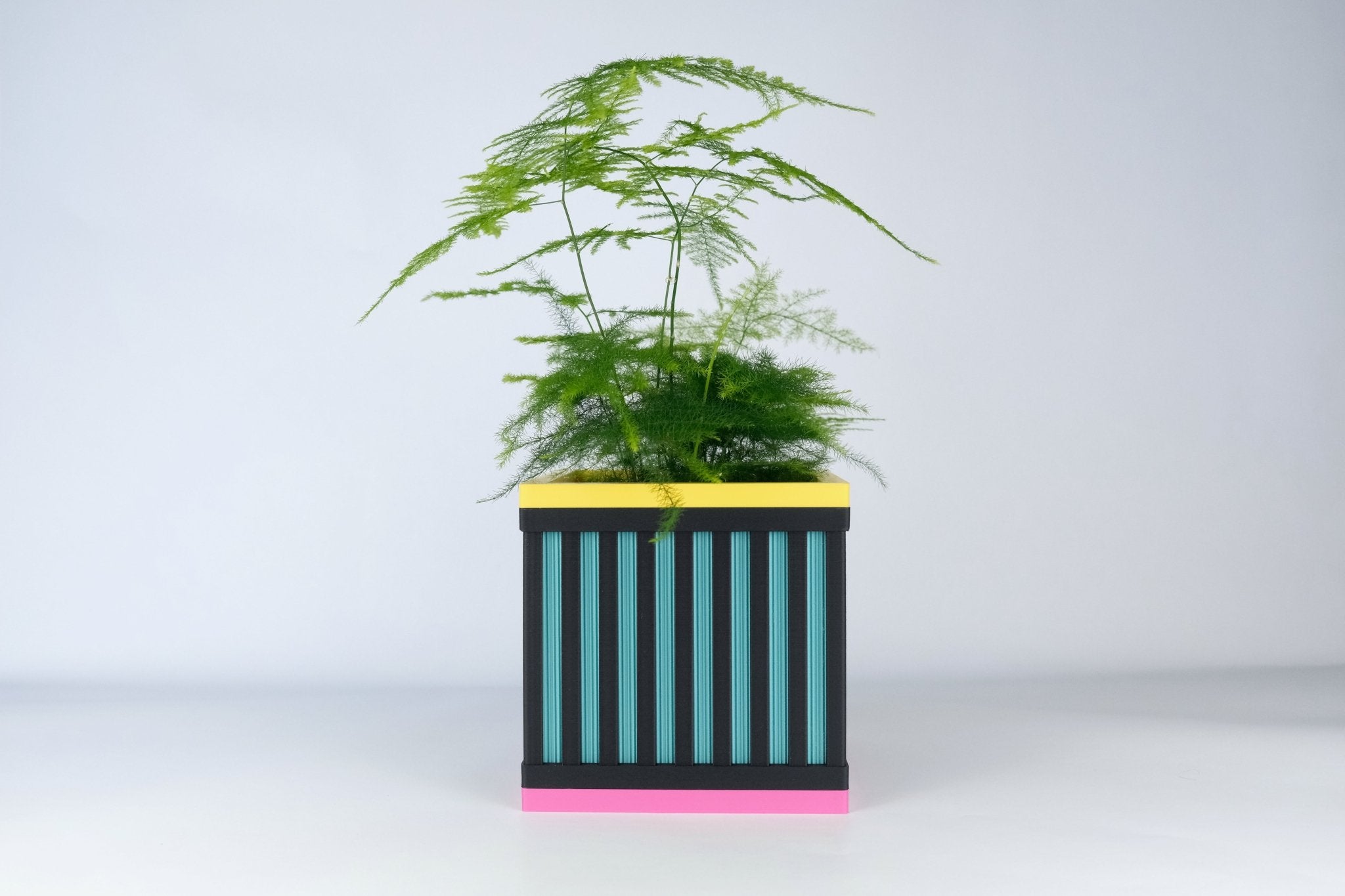
Choose one of the colorful Cube N°2 Les Arcadiens models to showcase your newly adopted plants.
Monsieur Marguerite: The eco-responsible florist offering French green plants

Based near Paris, Monsieur Marguerite focuses on seasonality and local sourcing to offer plants and bouquets made in France.
✅ Why this is relevant:
- A concrete commitment to French production.
- Short logistics that respect local employment.
🪴 Recommendation:
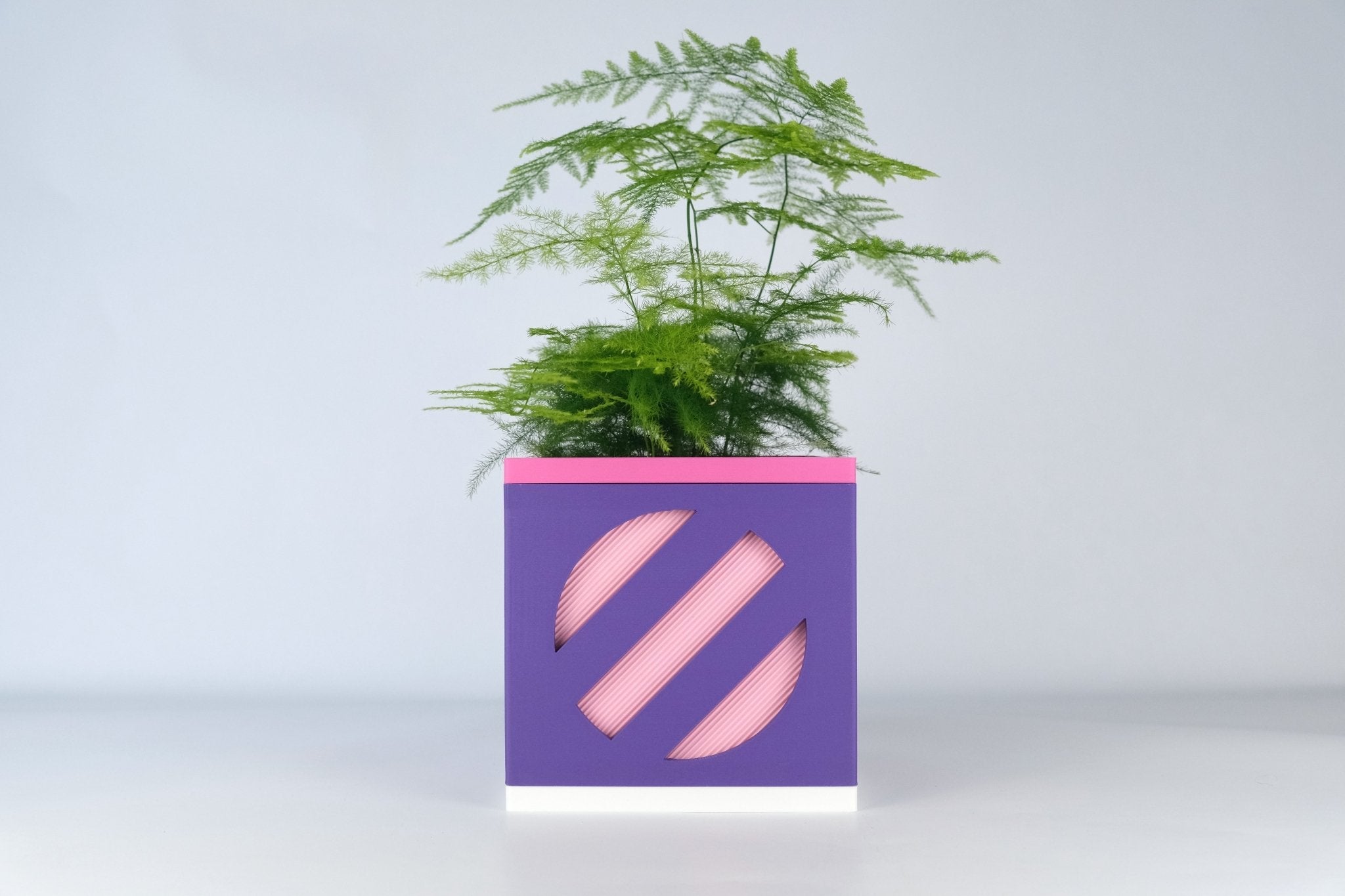
Place a French orchid in a Le Cube n°2 Violet/Violet cachepot for a perfect graphic combination.
Vertigea: French houseplants and designer accessories

Vertigea offers a beautiful selection of green plants, terrariums and decorative accessories, all chosen for their aesthetics and quality.
✅ The best features:
- A sharp and contemporary selection.
- A careful and sustainable approach.
Plant & Stories: French houseplants with a refined aesthetic

With its clean and stylish aesthetic, Plant & Stories appeals to those who see plants as true decorative elements.
✅ Why we like it:
- Collaboration with French producers.
- Quality, durability and refined aesthetics.
🪴 Decorating tip:
Choose a pink foliage and pair it with Cube No. 1 Violet/Pink for a perfect graphic match.
🌾 Why favour French green plants and short supply chains?
🌍 Environment & Logistics
Buying houseplants grown in France reduces transport distances, and therefore CO₂ emissions. Less importing means less packaging, refrigeration, and waste.
🏘️ Local economy & employment
Each purchase supports a producer, a business, a local passion. You contribute directly to maintaining horticultural expertise and the economic vitality of our regions.
🤝 Transparency & quality
Locally produced plants offer clear traceability, more sustainable practices and green plants better suited to our interiors.
🔁 Consistency with The Arcadians
Our plant pots are designed and manufactured locally in Caen , using bio-based materials . Pairing your plants with locally sourced products reinforces a shared philosophy: design, sustainability, and local sourcing.
⚠️ The less green side of “cheap houseplants”
It might be tempting to buy inexpensive indoor plants from large retailers. But behind these attractive offers lies a much more complex reality.
In France :
- 77% of indoor green plants are imported, mainly via the Netherlands .
- France imports 12 times more ornamental plants than it exports.
- These massive flows require road transport, heated greenhouses and plastic packaging, increasing their carbon footprint.
- The Ministry of Agriculture reminds us that imports can introduce pests and diseases into the country.
- Some supplier countries still use plant protection products that are banned in the EU.
In other words: the “low price” is paid for elsewhere: In energy, in biodiversity, in jobs lost.
🏪 And IKEA houseplants: affordable, yes… but at what price?

IKEA plants are appealing because of their availability and attractive price. However, several factors suggest caution:
- In April 2023, IKEA Belgium recalled ficus microcarpa ginseng plants contaminated with nematodes : parasites regulated in Europe.
- Reports indicate that some plants are imported from Florida or other distant regions , considerably lengthening the supply chain.
- Although IKEA displays sustainable commitments in its reports (FY22-FY23), its “high volume/low price” model makes it difficult to precisely control plant production conditions.
In short, buying a plant for €10 in a supermarket often means supporting globalized production at the expense of short supply chains, traceability and respect for the local horticultural sector.
🧑🌾 The profession of horticulturist, a threatened skill
Between 2011 and 2021, the number of horticultural farms decreased by more than 4% per year in France, a decline that has accelerated to -6%/year since 2021.
Indeed, producer-retailers, who sell directly to individuals, have gone from 59% to 52% of sales in just two years.
And for good reason: heavy investments, difficulties in transmission, international competition, climate change…
Therefore, supporting a local producer means preserving a passionate profession and an essential part of our agricultural landscape.
That's why buying French green plants is much more than a decorative gesture: it's a commitment to the environment, the local economy and the preservation of know-how.
📚 Sources
- Sustainable News – What is the ecological impact of houseplants?
- VALHOR – Trade flows of flowers and plants 2022
- Ministry of Agriculture – Plant health and hazards related to imports
- National Assembly – Written Question No. 769 on imported flowers
- Brussels Times – IKEA recalls plants contaminated with hazardous worm (2023)
- IKEA Sustainability Report FY22
- IKEA Sustainability Report FY23
- Agriculture in the Drôme region – Horticulture: a regional sector now in danger (2019)
- VALHOR – Structural Observatory of Horticultural Businesses (2023)