You've probably experienced this before. Your ficus or monstera is there, faithfully tucked away in its corner, but something's not quite right. Then one day, you simply change the pot. Suddenly, your plant takes on a whole new look. It didn't grow overnight. It's simply that its base finally connects with the rest of the room: a line, an intention, a presence.
Looking for a stylish plant pot for your houseplant isn't about finding a decorative element. It's about addressing a detail that structures the space. A bit like a frame around a photo: we don't think about it every day, but when it's not well-suited, it's all we see.
What “design” means for a plant pot
The word has become very broad. It is sometimes used to mean “pretty”, “neutral”, “Scandinavian”. But a truly designer plant pot is based on simple things.
First, a clear silhouette. Its shape is instantly recognizable, whether geometric, cylindrical, or conical. Second, balance. Neither too tall and slender, to the point of appearing unstable, nor too short and bulky, to the point of weighing down the corner. And finally, a perfect finish, allowing light to reveal the material instead of concealing imperfections.
In short, design is not a pattern stuck on a pot. It's the way the object occupies and organizes the space around the plant.
The proportions that change everything (and avoid the “utility pot” effect)
Most disappointments stem from a problem of scale. In a photo, everything looks perfect. Once you get it home, the planter looks enormous or, conversely, lost.
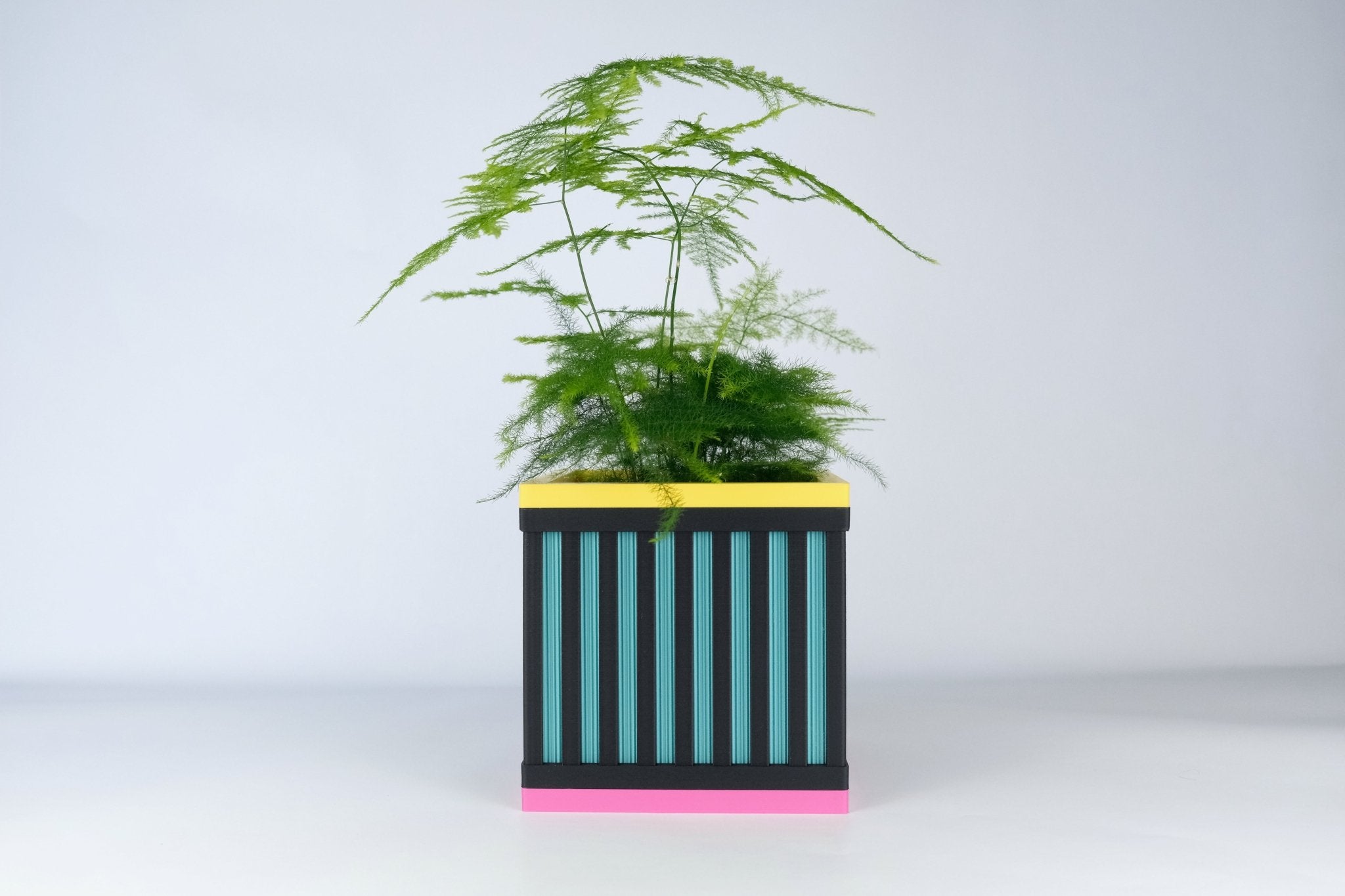
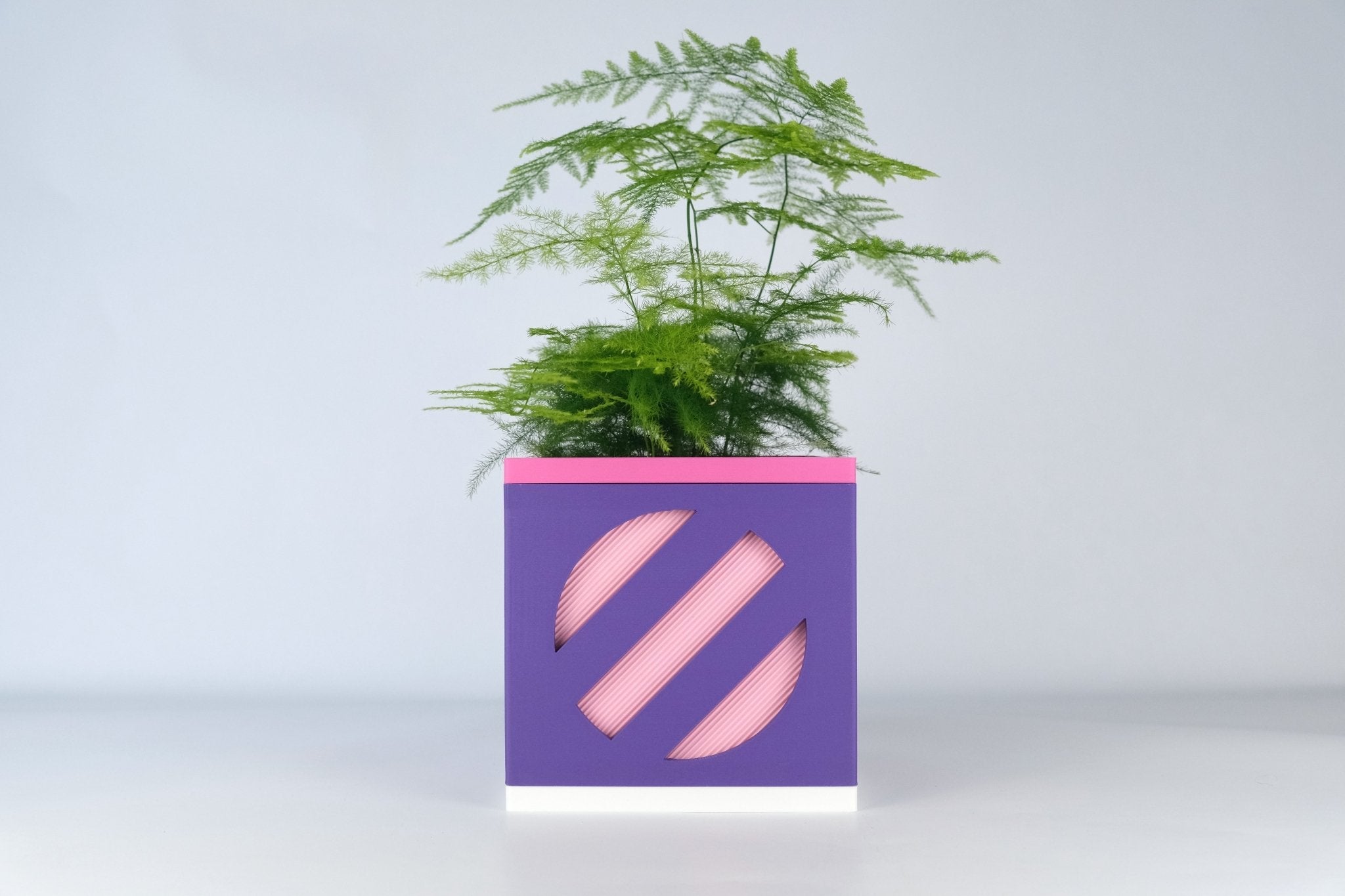
The idea is simple: give the plant a solid base. Lush foliage needs a firm anchor. Conversely, a delicate plant or a small cutting can quickly be overwhelmed by an overly large container. If you like clean lines, this guide to geometric plant pots can help you visualize what "structure" means in a room.
Height also plays a role. A tall model elongates the silhouette, but it can reveal the soil, supports, and base of the planter. A shorter format often creates a more graphic and structured look.
Materials: what you see, and what you experience
A plant pot isn't a display piece. You move it, you vacuum around it, it sometimes gets bumped, it gets splashed. So the material isn't just a matter of style.
Ceramics and terracotta have a strong mineral presence, often very beautiful in natural light, but they can be more fragile and heavier to handle. Painted or powder-coated metal provides a clean, architectural line, but it can either overwhelm or overwhelm an already very mineral decor, depending on the color and finish.
Bio-based materials, like those we work with in the studio, open up a new realm of possibilities: highly precise shapes, contemporary matte colors, and a true sense of lightness. And on a geometric form, the quality of the finish is essential, because everything is visible.
Colors: how to avoid overdoing it
Color is the quickest way to give a room character. And it's also the easiest way to create visual noise.
If your living room is already full of decorations (books, frames, patterns, textiles), a very expressive plant pot can be overwhelming. In this case, a matte, rich, slightly muted shade is the perfect choice without being jarring. Conversely, in a minimalist room, the plant pot can become a focal point. There's no need for a neutral color. A bold contrast often works best: dark foliage in a light container, light foliage in a deep shade.
If in doubt, start with what you already have. Look at the dominant colors (walls, floor, sofa). The planter can either harmonize or contrast, but it shouldn't disappear like wallpaper.
The plant pot as an object of interior architecture
A good object doesn't just look pretty. It organizes space.
On the floor, a planter can fill a corner that lacks structure: an empty angle, the transition between two areas, a floating space near a low piece of furniture. The plant gains presence because its base is clear.
On a shelf, a plant pot adds rhythm to a display. A round one softens strict lines. An angular one structures a somewhat free-flowing bookcase. On a desk, it's often what soothes the eye: a touch of life, but contained by a clean form.
Features: water management and everyday constraints
A beautiful object that complicates life eventually becomes irritating. With plants, everything starts with water.
The safest principle for most houseplants: keep the growing pot with drainage holes and use the outer pot as a cover. This allows for proper drainage and prevents water from stagnating at the bottom.
If you water directly into the cachepot, remember this: in a cachepot without drainage holes, a layer of clay pebbles won't eliminate excess water like proper drainage, and it can even trap moisture that rises towards the roots. The best approach is to control the excess water: use a saucer, a drip tray, or empty the pot after watering whenever possible.
Some models even include a water collection tray, which greatly simplifies daily watering. The Cube N°1 planter, for example, has a built-in water collection tray.
Also consider stability. A narrow base, a plant leaning towards the window, frequent foot traffic, children or pets, and it could tip over. A beautiful interior is nice. A practical interior is better.
Choose according to the plant (rather than the other way around)
We often do the opposite: we fall in love with a plant pot, then we look for a plant to put in it. It works, but the result can look a little forced.
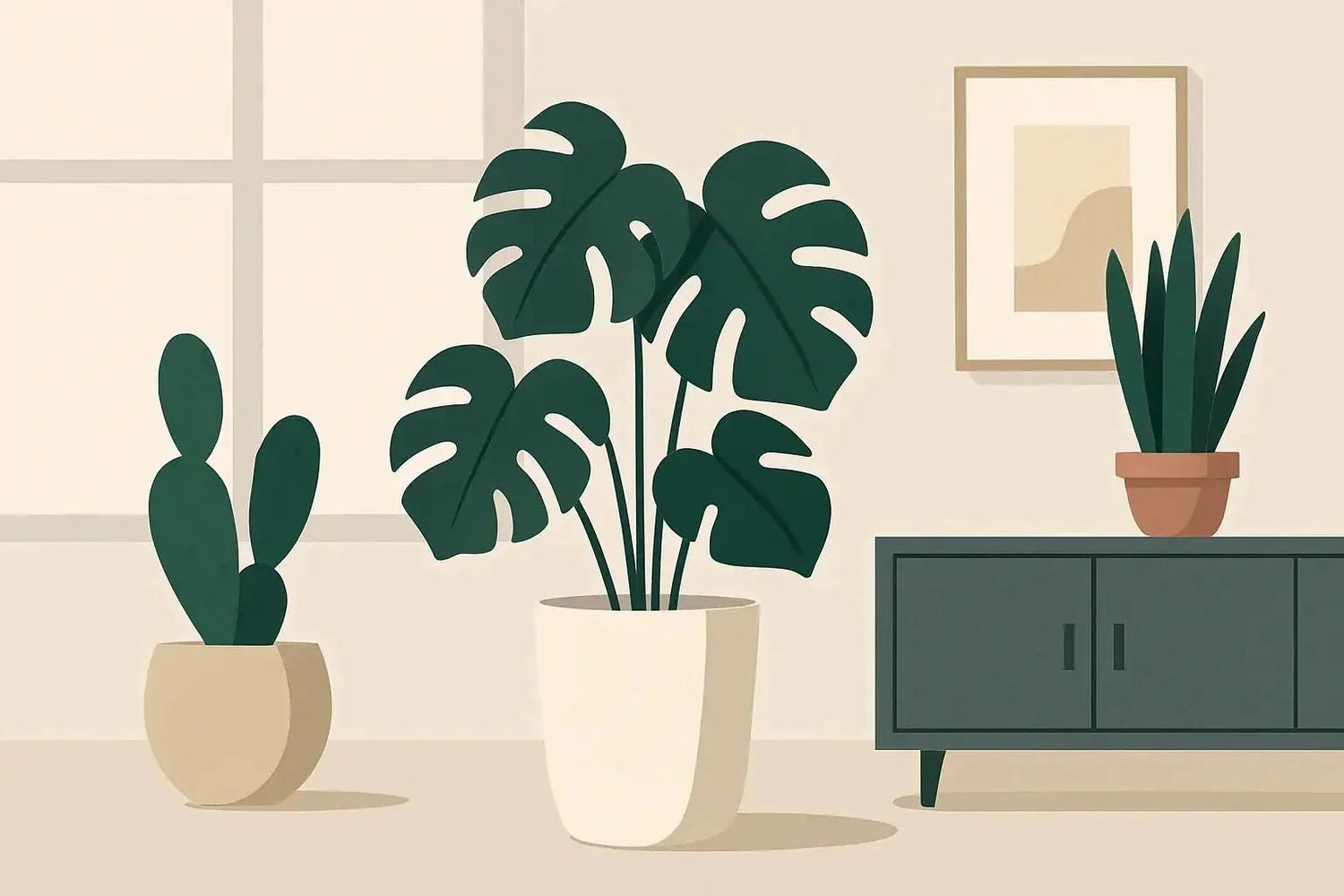
Generally, it's easier to start with the silhouette. Large foliage (monstera, philodendron) prefers a stable and visually simple base; otherwise, the eye becomes overwhelmed. Highly graphic plants (sansevieria, zamioculcas, cactus) thrive with strong shapes: they naturally extend their lines.
Trailing plants, like pothos, transform the planter into a focal point, while the stems create a sense of movement. In this case, a sharp edge or a deep color enhances the contrast.
When "Made in France" makes a real difference
Local manufacturing isn't just a label. In reality, it's reflected in the consistency of a color, the precision of a shape, the level of control, and a studio's ability to embrace a particular vision rather than chasing trends.
Choosing a locally made item also means having a clearer understanding of the materials and how it is made.
If you are looking for graphic, colourful pieces, designed and made in our workshop in Caen, you can explore the Les Arcadiens collections.
The right plant pot is the one that will continue to last even when you change everything else.
An interior is never static. You move a piece of furniture, change a rug, repaint a wall. A designer plant pot should be able to adapt to these changes without becoming out of place.
That's why the most effective pieces don't depend on fleeting trends. They have a confident shape, a color chosen as a solid block, and a material that ages gracefully. And when you feel a corner "doesn't work anymore," before buying a new plant, look at its base. Sometimes, that's where the key lies.