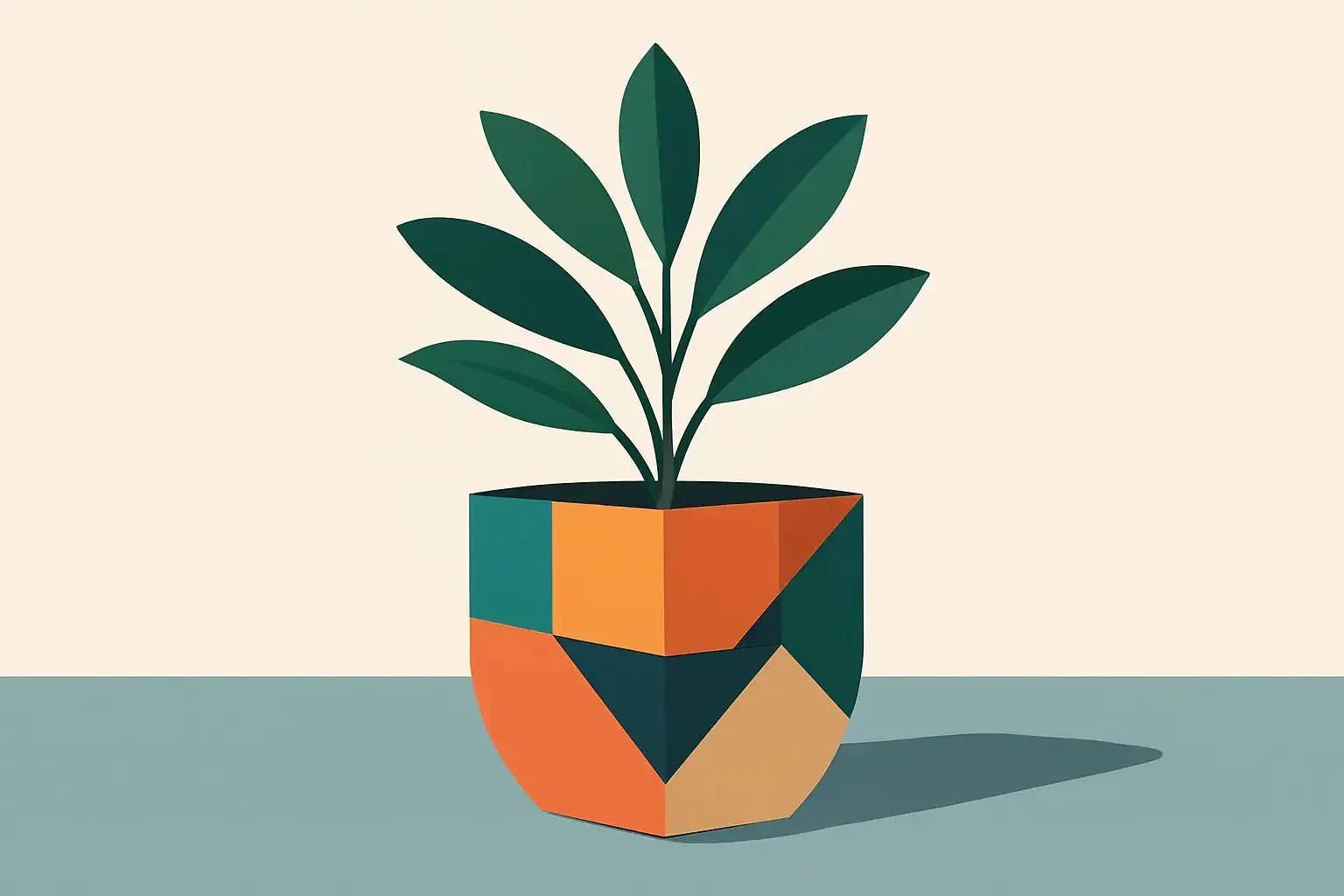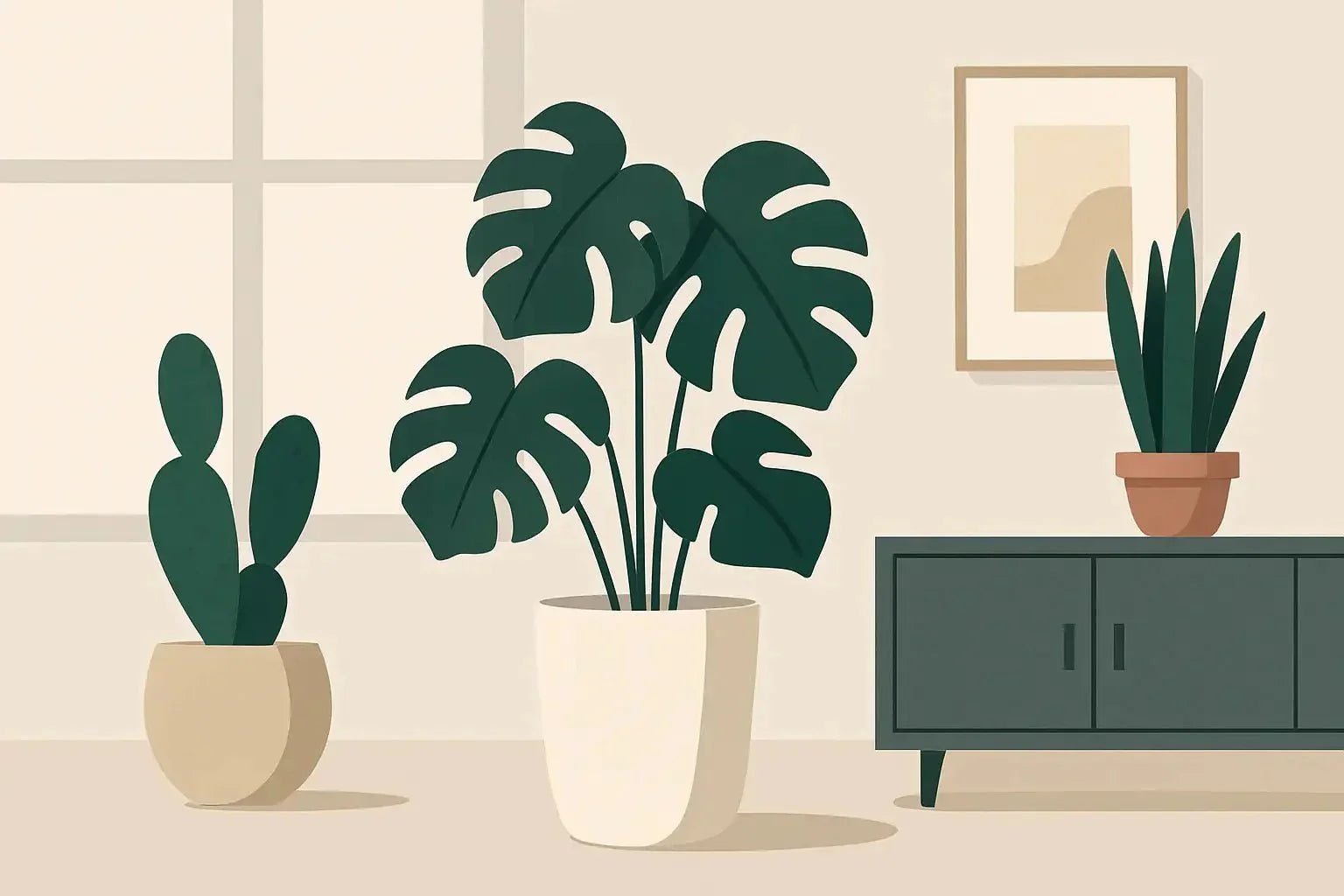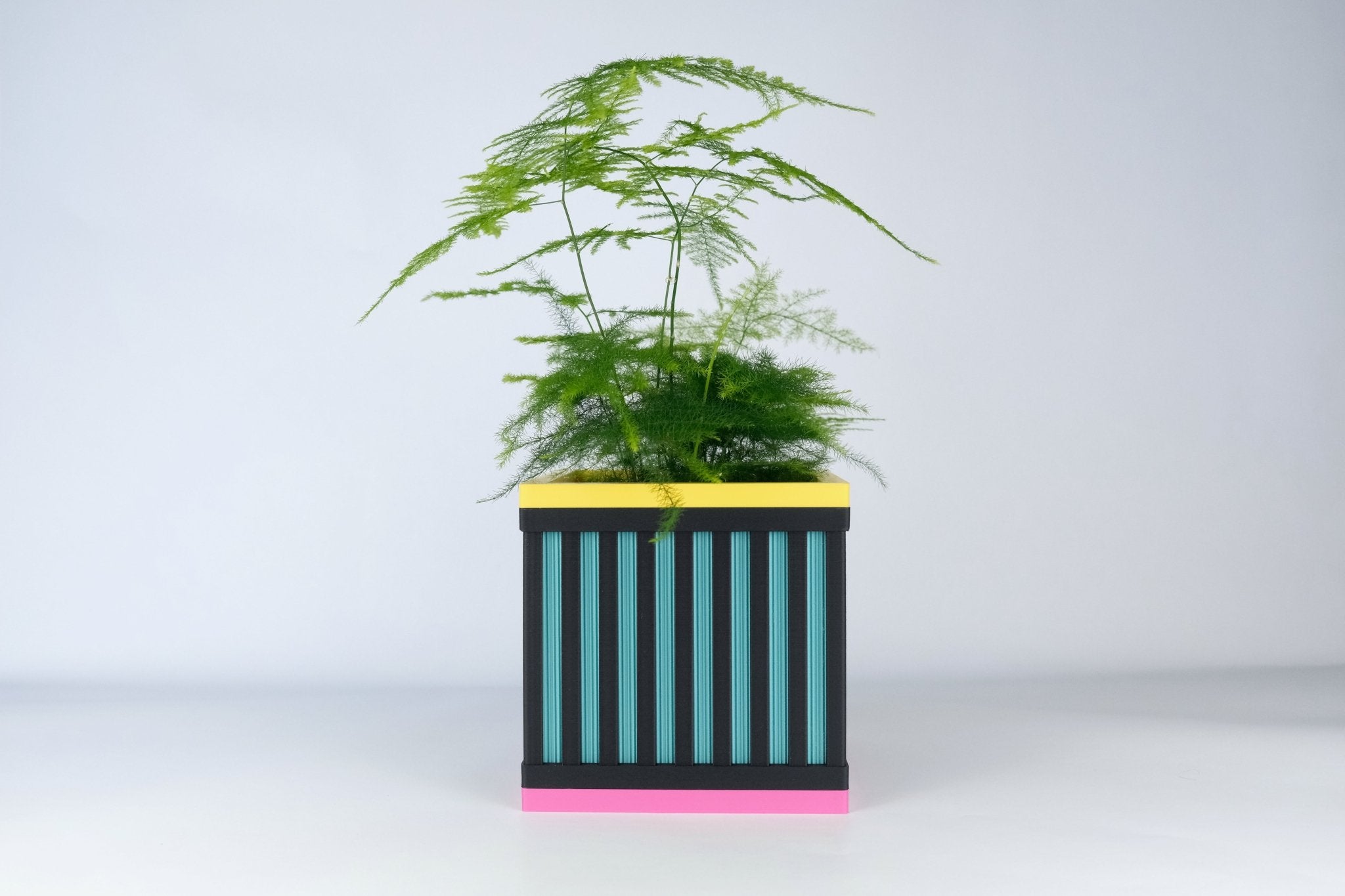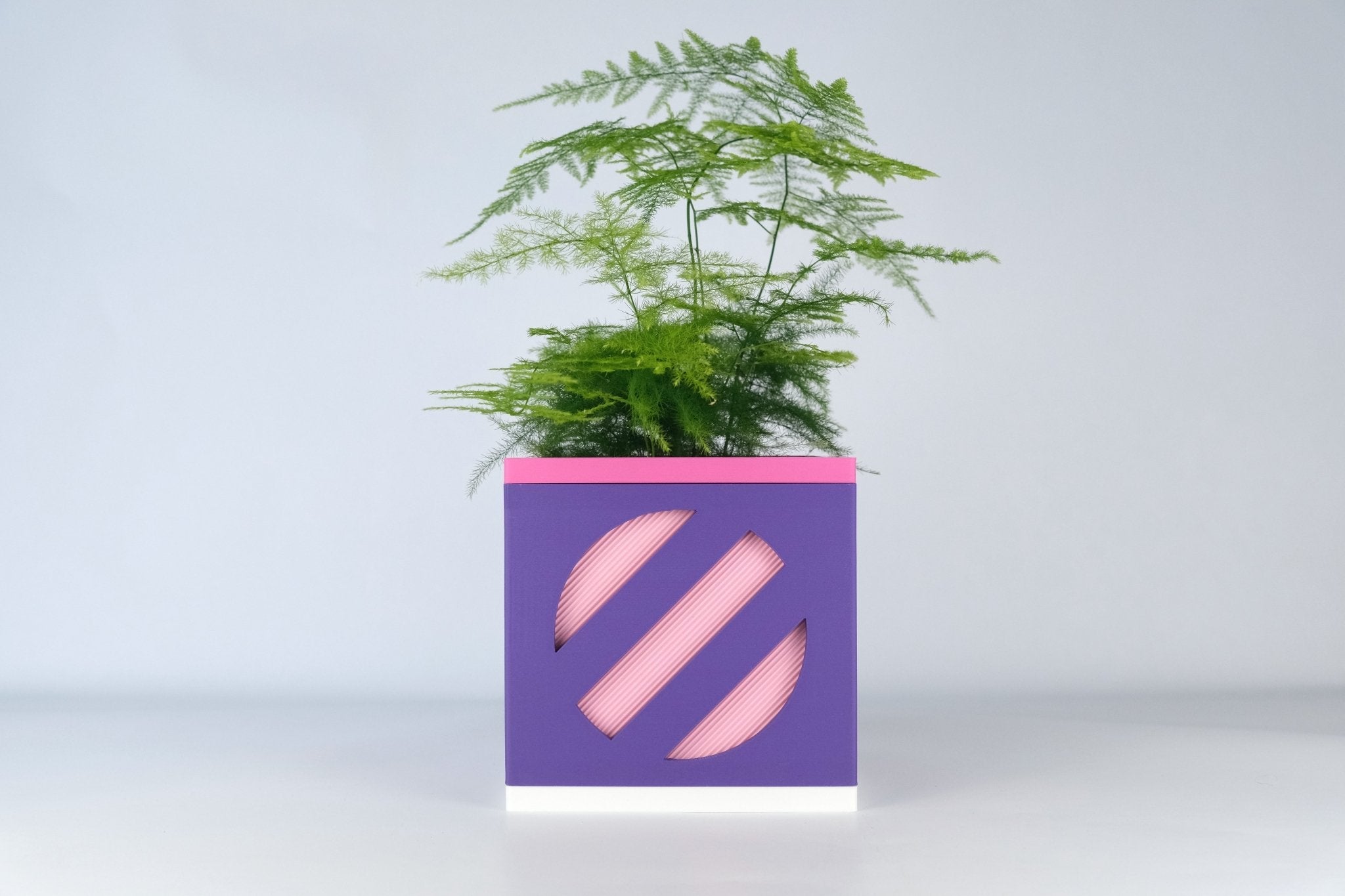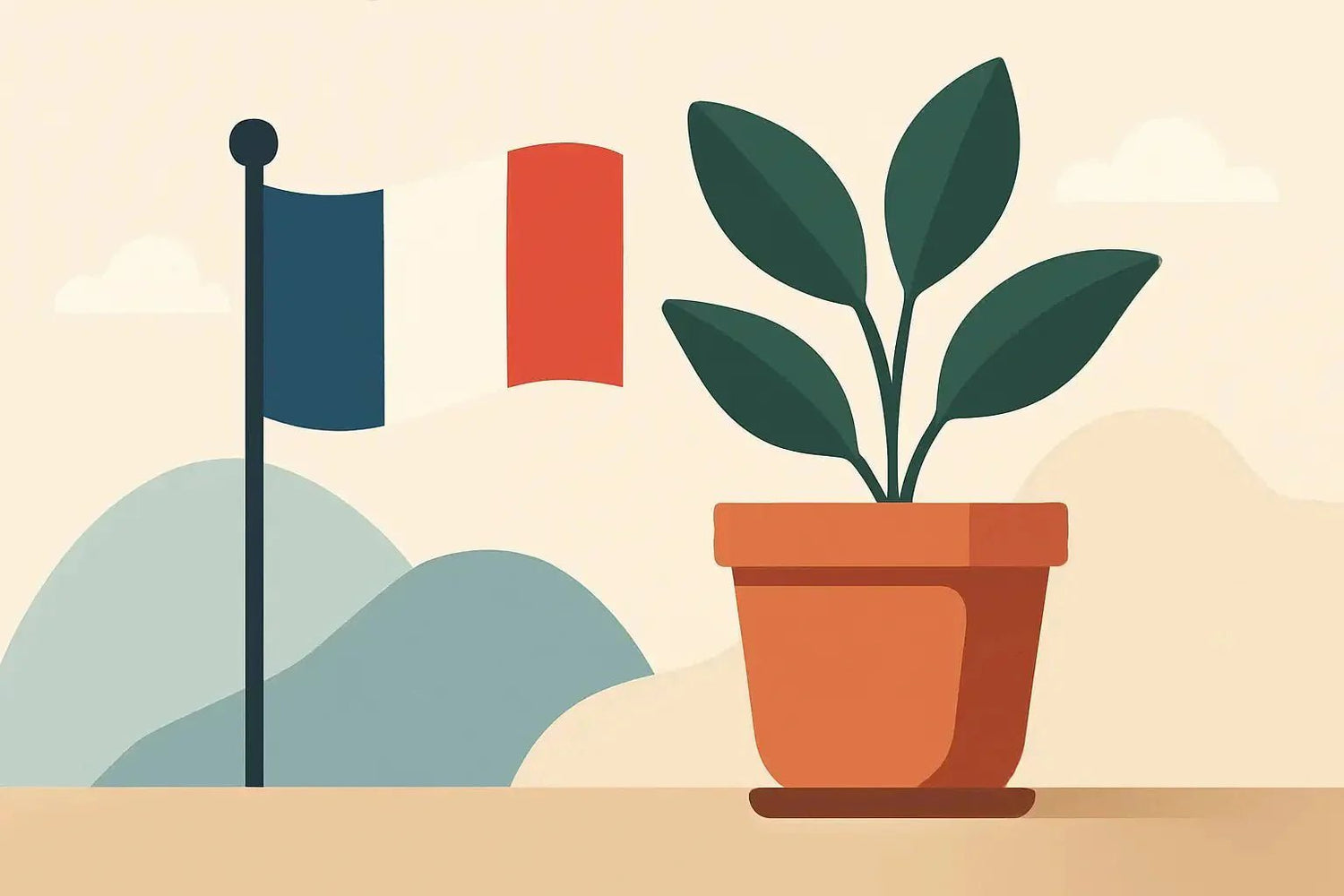
There comes a point when a plant ceases to be just a nice green thing and begins to truly take its place in the room. Most of the time, it's not the plant itself that makes all the difference, but also its base. A well-designed planter adds presence, makes a vibrant splash of color against a light wall. And when it's designed and made here, it also tells a story: a way of inhabiting the world, and a certain idea of what we expect from everyday objects.
Choosing a designer plant pot made in France isn't just ticking a box to ease your conscience. It's deciding that the object and its place of manufacture deserve genuine attention. Shape, material, proportions, finish. It's often a shorter supply chain that allows for high standards and maintains them.
Why a plant pot is a design object (not an accessory)
A plant pot is not simply a decorative container. It creates a transition between the living element and its surroundings. Between an evolving organic form and a geometry that holds it in place. Between the green of a leaf and mineral hues, matte or boldly colored.
Good design doesn't overwhelm the plant. It creates a foundation where it can flourish. In a living room, it can connect two materials that already coexist (wood and metal, for example). In an office, it structures a shelf and makes the whole space cleaner. In an entryway, it can become a signature piece: a simple shape, placed in the right spot, with the right proportions.
What makes all the difference is proportion. Too small, and the planter looks unstable. Too large, and it overwhelms the plant and takes up more space than it deserves. The design here is all about balance: a stable base and a harmonious ratio of height to opening.
Designer plant pot made in France: what difference does it make, in practical terms?
French manufacturing is often associated with "handmade". But what also matters is the ability of a small production unit to control its products.
When design and manufacturing are closely aligned, adjustments can be made. An edge can be corrected, an angle adjusted, a color recalibrated, a fit refined. And that's where the difference becomes visible: clean lines, smooth surfaces, an object that fits perfectly. A successful designer planter doesn't need much. Its quality lies in the precision, often in details we can't name, but that we perceive immediately.
Another very practical point is continuity. Local production makes it easier to maintain a color over time, preserve a collection-like feel, and avoid a complete stock shortage six months after purchase. When you're gradually building an interior, this is a real advantage.
Regarding the impact, let's keep it simple. Manufacturing in France doesn't erase the ecological footprint. But it often reduces distances and encourages more consistent choices, especially when the brand works with identified supply chains and is willing to say no to certain easy solutions. The trade-off is real: the price is often higher than a standard imported plant pot. In exchange, you're buying a piece designed to last, not a disposable item disguised as high-end decor.
Materials: the real difference between “pretty” and “durable”
We rarely choose a plant pot based on its technical specifications. Yet, it is the material that decides everything: the feel, the aging, what shows marks, what resists, what patinates well, and what does not forgive an approximate finish.
Ceramic has a distinct presence: weight, density, a mineral feel. It works very well for plants placed in a bedroom or living room. On the other hand, it can chip and doesn't withstand impacts well, especially in high-traffic areas.
Painted or powder-coated metal offers a more graphic, cleaner, and more contemporary look. It lends itself very well to taut lines, angles, and architectural volumes. However, it requires a high-quality finish to withstand the test of time and maintain its appearance despite friction and humidity.
Bio-based materials offer a third option. They are lighter, often very pleasant to the touch, and are a valuable asset when the goal is to reduce the use of fossil fuels. When properly crafted, they provide a subtle texture and a contemporary matte depth.
A simple question before choosing: will this plant pot keep up with the pace of your home? If you often move your plants, if you have children, or if the item is placed on a narrow shelf, resistance and stability are just as important as shape and color.
Shape and color: make a choice that fits in the room
Design often comes down to details. The right balance depends on your interior and the atmosphere you want to create, not on what you saw on a screen.
If your decor is graphic (straight lines, dark woodwork, minimalist lighting), a geometric planter extends this aesthetic and creates rhythm. In a more traditional interior, with parquet floors and moldings, a clean, simple shape can create a very interesting tension, provided you stay within a cohesive color scheme.
Color isn't just a matter of taste; it's an interaction. A bold plant pot against a white wall creates an immediate contrast. Against a colored wall, you must either harmonize with a tone-on-tone scheme or embrace a bold contrast. And matte finishes often have an advantage: they absorb less light and allow the plant to visually breathe.
A simple rule of thumb: look at your room at different times of day. A color that's perfect in the morning can become too saturated by late afternoon. Design is also about light.
The details that betray the quality
A plant pot can look perfect online, then disappoint once it's in your home. And it's almost never a major flaw that immediately catches the eye. It's the tiny details that accumulate until the whole thing no longer works.
Stability first. An uneven base and the object loses its presence. Next, the edges: a lip that's too thick makes it look utilitarian, a poorly controlled edge makes it look like a prototype released too soon. The color must be consistent. And the interior must be as refined as the exterior. A good object has no hidden side.
Finally, check the ease of use. Does your plant pot fit easily? Is there enough room to remove the plant without pinching anything? Does the product have a simple system for collecting water, or at least a way to easily empty excess water? These are details, but they're what make us keep an item for a long time.
How to choose the right size without making a mistake
The most reliable rule: start with the plant pot, not the plant. Measure the diameter and height of the pot. Allow a comfortable margin for easy insertion and removal. If it's too tight, you'll damage the plant, scratch the inside, or end up not daring to remove the pot for watering.
Also consider the placement. On a narrow console table, a base that's too wide will visually overwhelm the space. On the floor, a planter that's too small will look lost. Here, it's not an abstract rule: it's immediately noticeable.
And if you're hesitating between two sizes, ask yourself a simple question: will this plant grow quickly? Anticipate this a little to give it the necessary space to flourish.
Online shopping: how to shop with peace of mind
A designer plant pot is often chosen from a photo, and that's normal. The idea is to reduce the risk by using a few concrete guidelines.
Look for clear visuals: close-ups of the material, profile views to understand depth, and photos of the product in context to show scale. And above all, precise dimensions. If you're told it's "large" or "medium" without specific numbers, that's a real red flag.
Also check the delivery and return conditions. A beautiful object is also a simple experience: receiving, placing, deciding.
If you're looking for a distinctive graphic style, handcrafted in a workshop, and a sustainable approach, take a look at Les Arcadiens . Our plant pots are designed and made in Caen, and conceived to create contrast and presence without cluttering the space. You can discover the collection here: designer plant pots .
The truly good plant pot: the one that stays by your side, year after year.
You might love a plant pot for its color, its shape, or the promise of its craftsmanship. But in the long run, the real question is simpler: does it manage to find a place in your daily life? Does it withstand being moved, watered, changing light, and rearranging your garden?
The next time you repot a plant, take ten seconds before putting it back exactly where it was. Move the decorative pot about twenty centimeters. Observe the line it creates. If the pot is well-chosen, you'll immediately see its effect: a calm yet confident presence, and a space in your room that suddenly feels more balanced.