An object can sit discreetly on a shelf and yet transform an entire room. The difference rarely lies in accumulation, but in the precision of the object's design, in a unique color, in a material that exudes quality. When you look for a French design studio, you're not just looking for a place of production. You're looking for a way of designing objects, and a certain vision of interior decoration.
This choice expresses more than just your taste in decor. You no longer want generic objects, designed to please everyone and ultimately leaving no impression. You want a useful, visually appealing, and durable piece, capable of adding rhythm to an office, structure to a bookcase, or a subtle presence to a living room. In this context, "Made in France" isn't just a label. It's a form of consistency.
What we really expect from a design studio made in France
This label may seem broad, but behind it lie very concrete expectations. A design studio made in France must do more than simply produce a pretty object. It must master the design process, understand its use, embrace an aesthetic, and maintain control over the manufacturing.
This direct link between the idea and its realization changes everything. A part designed, produced, and assembled within the same ecosystem gains in precision. Proportions are better maintained, finishes more consistent, and adjustments are faster. We move away from a catalog-based approach and into a process of refinement.
For the buyer, this quickly becomes apparent. The object has a stronger identity. It conveys less of a trend than an intention. And it inspires more confidence because we know where it comes from, how it is made, and under what conditions.
Made in France is not just a question of origin
"Made in France" is not just a mention on a label. Behind this expression lies a way of thinking, of producing, of linking form to intention.
An object made here isn't necessarily beautiful by nature, any more than a beautiful object is if it arises from an opaque process. What gives a creation its true worth is the subtle harmony between its form, its use, its origin, and the care taken in its making.
In a meticulous French workshop, every gesture counts. The choice of material goes beyond mere aesthetics: it invites touch, endures over time, and reflects a commitment to resource conservation. The colors don't follow trends; they evoke an atmosphere, play with light, and give the object its presence in the space.
Working locally also means adopting a different, slower, more human pace. Small production runs allow for experimentation, adjustments, and improvements without sacrificing individuality. This close relationship between designers, craftspeople, and users fosters a chain of trust and preserves the essence of the craft.
Producing locally is, above all, an environmental and social commitment. It reduces transportation, promotes skills that are often threatened, and supports jobs rooted in local communities. Beyond aesthetics, "Made in France" becomes a coherent act: aesthetic, responsible, and profoundly human.
A visual signature, not just another object
In a contemporary interior, nothing is truly insignificant. Every object, however discreet, contributes to the overall feel of the space. It doesn't need to attract attention to exist; it simply needs to be appropriate, to find its place naturally. It is in this quest for balance that a design studio distinguishes itself from a decorative brand.
Where standard decor often seeks to please, the studio thinks in terms of volume, light, and silent presence. It explores the delicate tension between minimalism and expression, between understatement and personality. Too neutral, an object fades into the background. Too demonstrative, it disrupts the harmony. Between these two extremes lies a rarer space: one where the piece engages in dialogue with its surroundings, structuring without dominating, revealing without imposing.
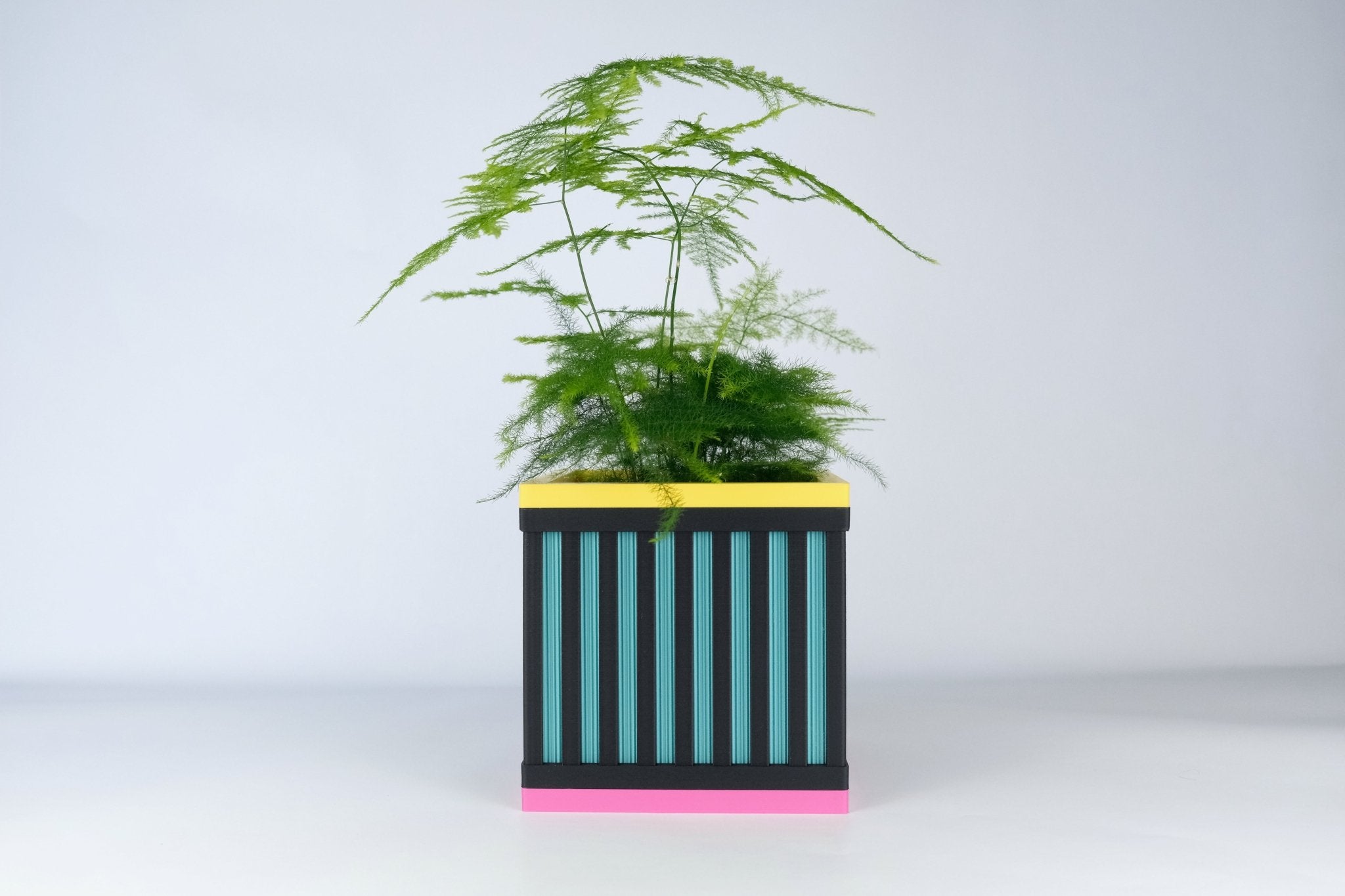
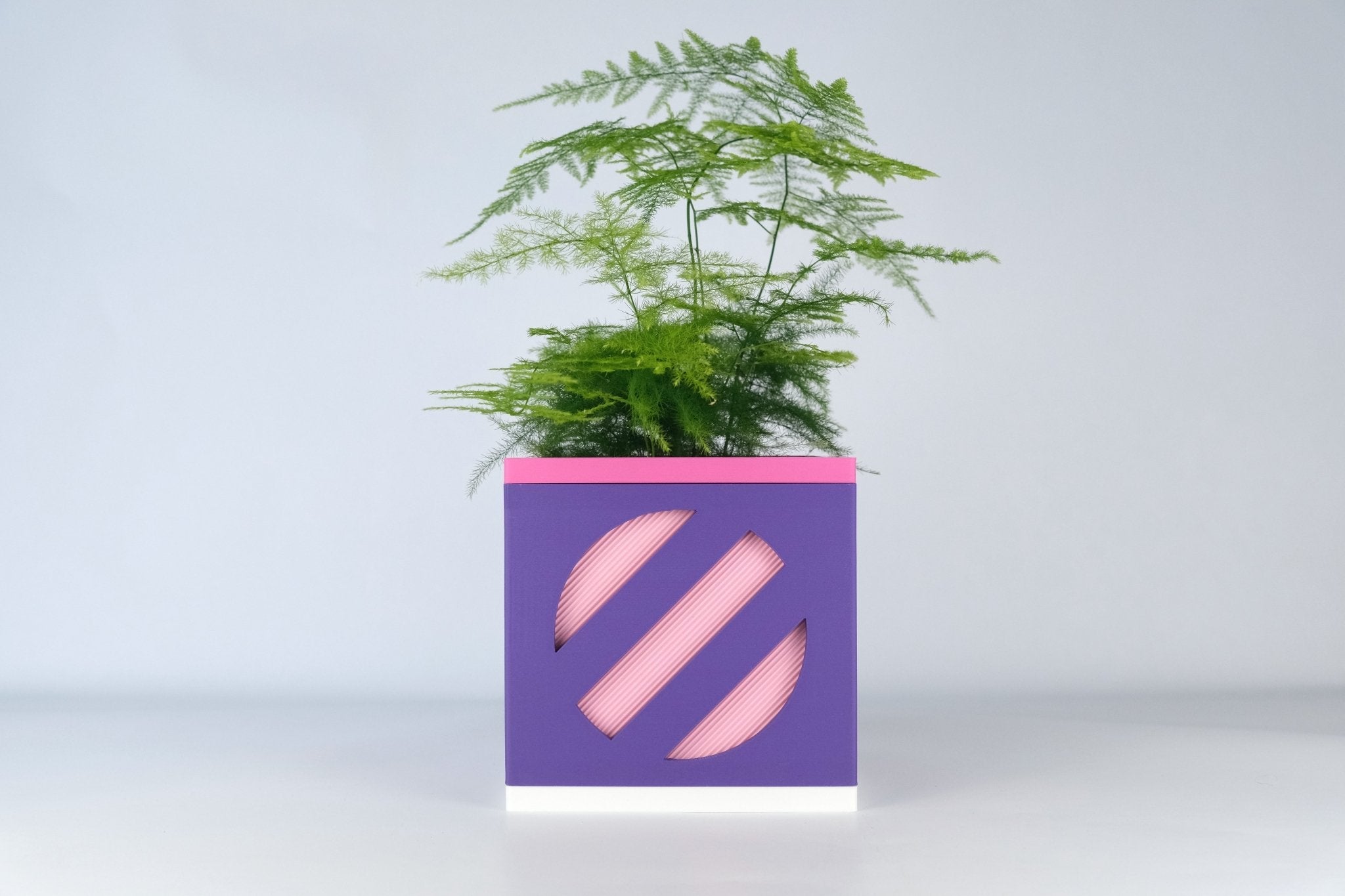
This is especially true for everyday objects. A plant pot can simply hold a plant, or become a graphic focal point, with clean lines and a color that complements the room. A bookend can remain purely functional, or incorporate clever modularity that gives it multiple uses. A lamp can simply provide light, or sculpt light, create a play of shadows, and establish an atmosphere.
It is these subtle shifts that give the object its value. We are not simply buying a function. We are choosing a presence in our daily lives.
Design workshop made in France and real sustainability
The word "sustainable" is everywhere. Yet it needs to regain its meaning, beyond mere slogans. In interior design, true sustainability often begins with a simple gesture: keeping an object for a long time, because we continue to love it, to look at it, to touch it.
For a French design studio, this commitment takes on a special significance. Producing locally isn't enough; the approach must be extended through concrete and sincere choices: bio-based materials, integrated manufacturing, short supply chains, and pieces designed to stand the test of time without losing their visual impact or functionality. It is within this coherence that a sustainable aesthetic emerges.
Local production, too, has its nuances. It doesn't promise perfection; the cost is sometimes higher, the production runs smaller, the finishes more understated. But within these limitations, a new demand emerges: less fragmentation, more meaning. Every decision counts, every material has its weight, every gesture retains its value.
A single, timeless piece, passed down from one home to another, is far better than an accumulation of anonymous objects that fade as quickly as they appear. Here, sustainability becomes a way of life, the pursuit of an honest connection between beauty, function, and responsibility.
Why this approach appeals to a new generation of buyers
Between the ages of 25 and 45, people no longer furnish their homes in a rush, accumulating objects out of immediate need. They compose. They look for pieces that tell a story, capable of evolving with them: the first apartment, the purchase of a place of one's own, a workspace to set up, or a room to reinvent without turning everything upside down.
In these times of transition, the French design studio finds its natural place. It doesn't dictate a style, it offers a presence. Objects that are just right, accessible in their use, yet singular enough to assert an intention. No need for a gallery interior; a single piece of furniture or a lamp is enough to change the atmosphere of a space.
This generation of buyers also wants proof. The simple desire for beauty is no longer enough: they question origin, manufacturing, traceability, and ease of exchange or repair. Pragmatism is intertwined with emotion. Design is no longer opposed to responsibility; it thrives on it.
This is where the studio-workshop's appeal lies: it offers more than just a silhouette. It presents a clear vision, a recognizable hand, a direct dialogue between those who create and those who live with the objects. Through this transparency, buyers rediscover what they seek above all: meaning, connection, and a form of enduring beauty.
How to recognize a credible workshop
A workshop doesn't simply employ inspiring vocabulary; it expresses a logic. Each collection follows a line, each object assumes a precise role. The forms respond to one another without ever repeating themselves, and the manufacturing process is not a mere backdrop for communication but the natural extension of the design.
Just listen to how a brand talks about its products. If everything looks the same, if every item promises the same thing, it's often because there's a lack of thought in its design. Conversely, when each creation offers a unique benefit, modularity, a nuance of color, a way of catching light or articulating a structure, you perceive a coherent vision, a true direction.
The other key lies in the balance between aesthetics and functionality. A beautiful object doesn't need to be over-explained. It simply needs to fit into real life. It should naturally find its place on a console, a desk, a shelf, or a side table. It should exist in everyday life, breathe in a lived-in interior, not just in a photograph.
This is precisely where the Les Arcadiens workshop distinguishes itself. In Caen, integrated manufacturing and the use of predominantly bio-based materials are not secondary to design; they form the very basis of its approach. Each piece maintains a clean line, a graphic presence, and a clear function. Neither demonstrative nor decorative, it finds its place with precision, in a rare balance between beauty and practicality.
Choose less, choose better
Choosing a design studio made in France means first and foremost accepting to slow down.
No longer buying to fill a void, but to reveal an intention. It's preferring precision to quantity: a minimalist lamp that softens the evening light, a modular object that adapts to everyday gestures, a geometric shape that brings graphic tension to a serene whole.
The right object doesn't transform everything, but it changes the tone. It introduces a presence, discreet yet assertive, that gives the space a new coherence. And when this presence is based on local, transparent, and demanding production, it acquires a particular density: that of know-how and rediscovered meaning.
For those who are looking for pieces that do not just occupy a space, but that truly define its atmosphere, the starting point is often the same: to find a workshop that knows what it wants to bring out in the life of objects, and in the places they inhabit.