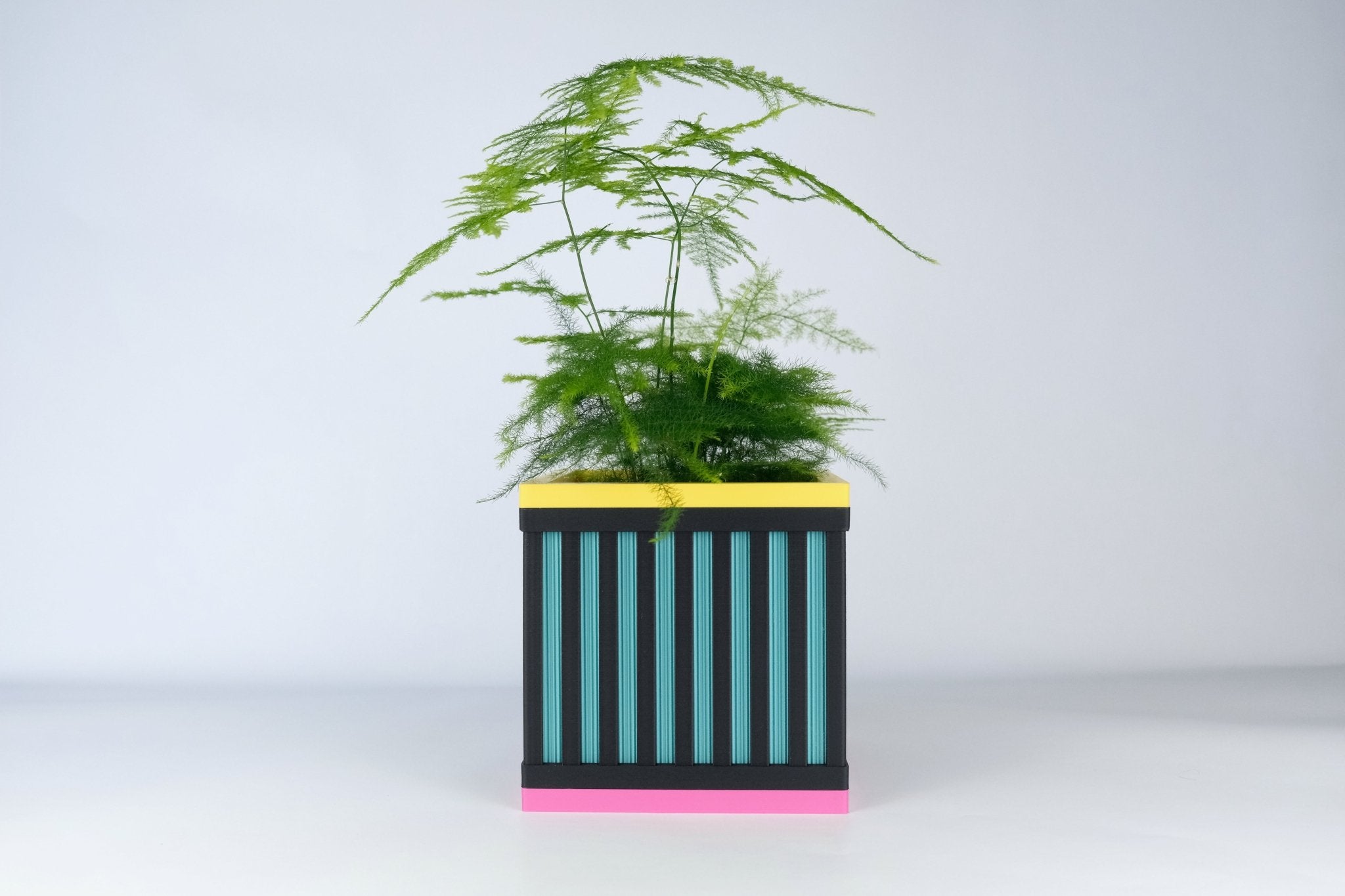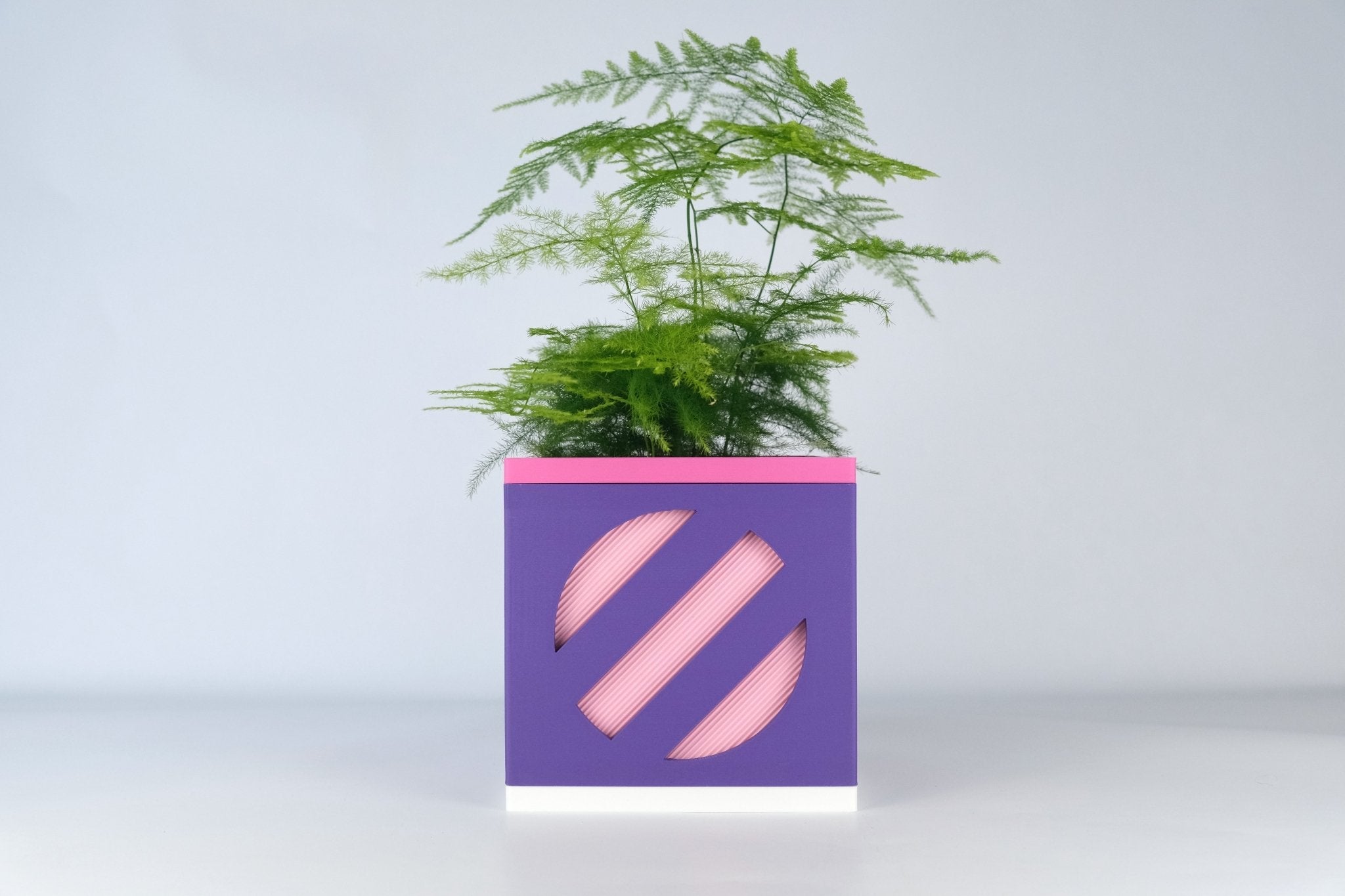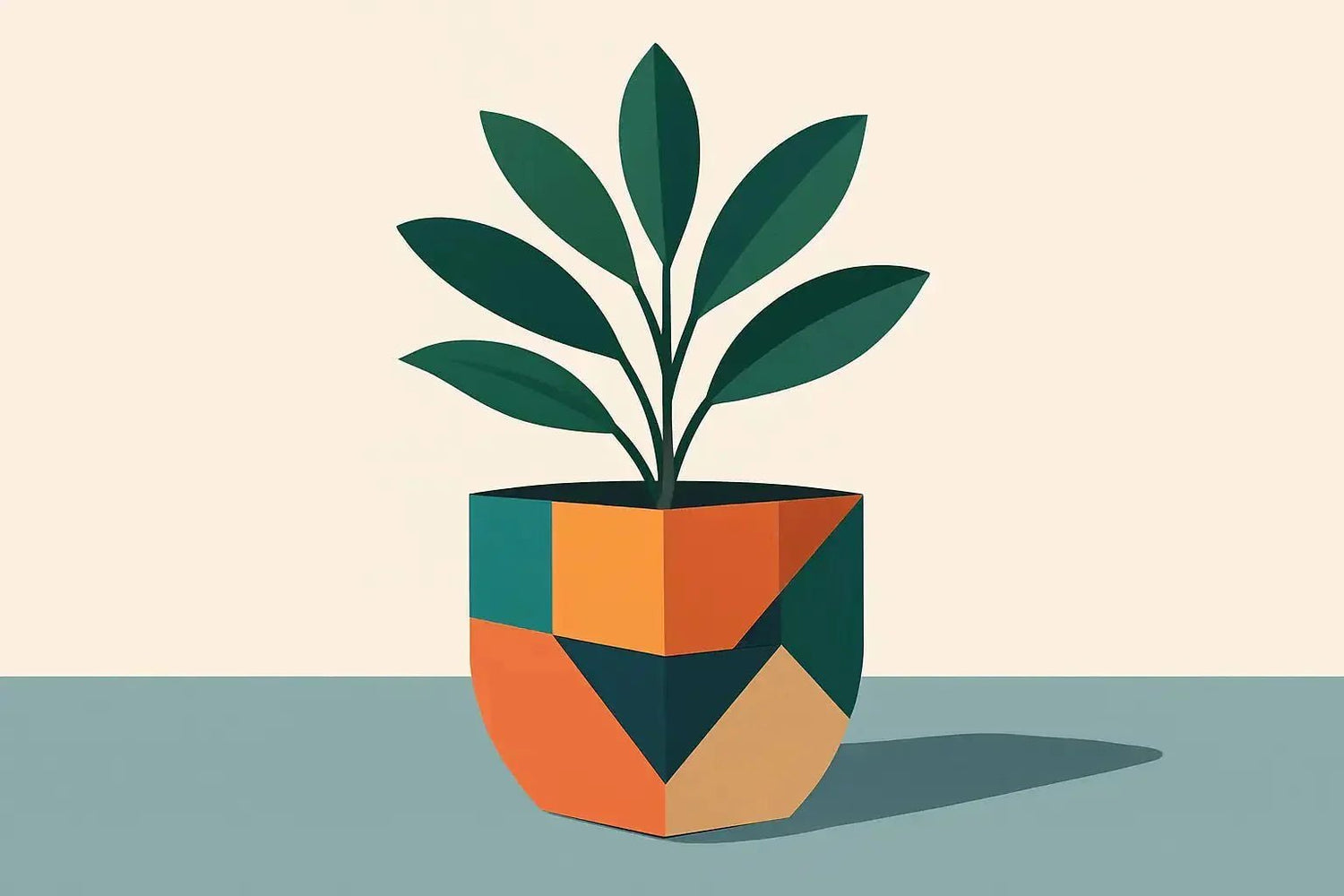
Sometimes, all it takes is a well-designed plant pot to transform a room. Not just because it adorns a plant, but because it defines its setting. A clean shape, a well-chosen color, and suddenly the plant occupies a different place in the space. The colorful, geometric plant pot is no longer just an accessory; it's a small architectural object in its own right.
Why geometry changes everything in an interior
A plant is alive. It overflows, it leans towards the window, its shape changes with the seasons. Geometry counterbalances this: a stable volume, a form that structures, a base that holds everything together. A cube or a prism provides an almost architectural foundation, without making the plant rigid.
It's immediately noticeable: the plant is showcased to its best advantage, and the space it's placed in comes alive. Even a very simple pothos resembles a composition, because the base draws the eye. In a minimalist living room, the shape of the planter creates a focal point. In a more cluttered interior, it brings a touch of order and structure to the room.
Another, more subtle advantage: the shape blends seamlessly into your living space. The corners of a coffee table, the uprights of a shelf, the tiles of a backsplash. The cleaner the geometry, the better the object integrates, as if it were made to be placed there.
If you want a very concrete checklist, the article "Designer plant pot made in France: the criteria that really make the difference" sorts between pretty and durable.
Color: presence, contrast, and balance
On a plant pot, color isn't just pretty. It's a splash of color in the room that immediately catches the eye. The real question isn't "what's my favorite color?", but "what color am I willing to see every day, at the same height, in the same place?"
For a minimalist interior, neutral tones are often the easiest to live with: slightly grayish, they capture light without overwhelming the decor. They add depth, especially next to a vibrant plant green.
If you want a room that draws the eye, choose a striking contrast. A rich color on a light wall, or a light tone against a darker background. Keep this simple rule in mind: one contrasting element is enough. The rest will follow.
Also consider the foliage. A very dark green pairs well with warm tones (terracotta, reddish-brown, ochre). Light or variegated foliage often blends better with crisp, graphic colors. And if the plant has purple veins, red stems, or silvery highlights, you can simply echo an existing color. This is often what makes the overall effect more harmonious effortlessly.
To help you quickly visualize the possibilities, the "Designer plant pots for indoor plants" collection offers a range of colorful and highly graphic plant pots.
Creating harmony without falling into monochrome.
You don't need to match everything. You just need to coordinate. Matching means creating echoes everywhere. Coordinating means choosing a color that works with the rest, without aiming for a perfect match between every object in the room.
With light woods and ecru textiles, "warm" colors almost always work: terracotta, reddish-brown, spicy yellow. In a more urban setting, with concrete, metal, and black lines, cooler or more saturated tones work very well, as long as the form remains simple and legible.
The key test: does the planter still look good when the plant isn't thriving? A plant is a living thing, and sometimes it goes through a rough patch. The planter, however, must continue to hold everything together.
To go further, the article "How to choose your designer plant pot well? (proportions, colours and materials)" gives other very concrete guidelines.
Size, proportions and placement: what stands out and what can ruin everything
Most failures stem from a single factor: proportion. Too small, the planter looks fragile. Too large, it overwhelms the plant and ruins the overall composition.
Think in terms of silhouette. Base at the bottom, plant mass above. A slender, upright plant (sansevieria) prefers a wider base, which anchors it. A plant that is already very large (monstera, ficus) tolerates a more compact volume at the bottom better; otherwise, it all looks "blocky."
Placement makes all the difference. On a sideboard, a plant pot becomes an object just like a book or a lamp. The color is visible at eye level, so it can be bolder. On the floor, the shape almost becomes a piece of furniture. There, the geometry and color must be impeccable.
If you want an “anti-mistake” guide, the article “How to choose a plant pot cover without getting the size wrong” is very useful.
One practical detail that matters: light and reflections
The finish changes the color. A matte finish absorbs light and makes the planter appear denser, more "full." A satin finish catches reflections, and the color comes alive, especially near a window. It's a small detail, but it's often this detail that makes a color look chic or not.
In a dimly lit space, a dark, matte tone can be stunning, yet very subtle. In a bright room, it becomes spectacular. Always consider the room's orientation: the same color conveys a different message facing north and south.
Material and durability: what you're really paying for
A plant pot can be moved, sometimes scratched, take a small knock, and be exposed to moisture. The material matters, but above all, so does how it is designed and finished.
Ceramic tiles have a mineral presence and a reassuring weight, but they don't work well on hard floors. Composite and bio-based materials can be more forgiving in everyday use and offer very precise geometry, provided they are well designed .
What you're really paying for is the clarity of the volume and the quality of the surface. On a geometric shape, everything shows. A soft edge, an uneven surface, and the object immediately loses its appeal.
And then there's the question that often comes up: responsible or just pretty? Local manufacturing allows for real control and avoids some unnecessary journeys, especially when the studio designs and manufactures in the same place.
Everyday use: watering, protection, and common sense
A cachepot isn't necessarily a pot. Most of the time, you simply place the plant pot inside it. This is the simplest method: you take the plant out to water it, let it drain, and then put it back in. This way, you avoid any unpleasant surprises at the bottom (mold, sediment).
If you place the plant directly in the decorative pot, you must be mindful of watering it. Without drainage, excess water will stagnate. Some plants are more forgiving, others are not. If you often water "by feel," stick with the nursery pot and decorative pot combination. If you water infrequently and precisely, you have more leeway.
And don't forget the bottom. A stable base means comfort. A felt pad or a small, discreet support also prevents micro-scratches, especially if you move the item to clean or rotate the plant.
What a colorful geometric plant pot says about your style
A colorful, geometric plant pot isn't neutral. It says you like clean lines. That you prefer a tidy room to a haphazard decor. And that color, in your home, is a deliberate choice.
That's why it works so well during times of transition: a first apartment, a new move, a home office that finally needs to stop feeling temporary. A well-chosen planter adds structure without requiring a complete redecoration.
And if you are looking for a piece designed and made in France, with a real graphic signature, the studio Les Arcadiens works precisely on this intersection between volume, color and use from its workshop in Caen.
Making the right choice also means accepting a bias.
The best plant pot isn't the one that goes with everything. It's the one that creates a subtle tension: a sharper shape than the rest, or a slightly bolder color than your usual palette. It's this contrast that brings the object to life.
If you are hesitating between two shades, choose the one that seems almost too bold, provided that the shape remains understated and precise.
Keep this simple rule in mind when choosing: if you can picture the planter even without the plant, you've found the right one. For everything else, your lighting will do the rest.